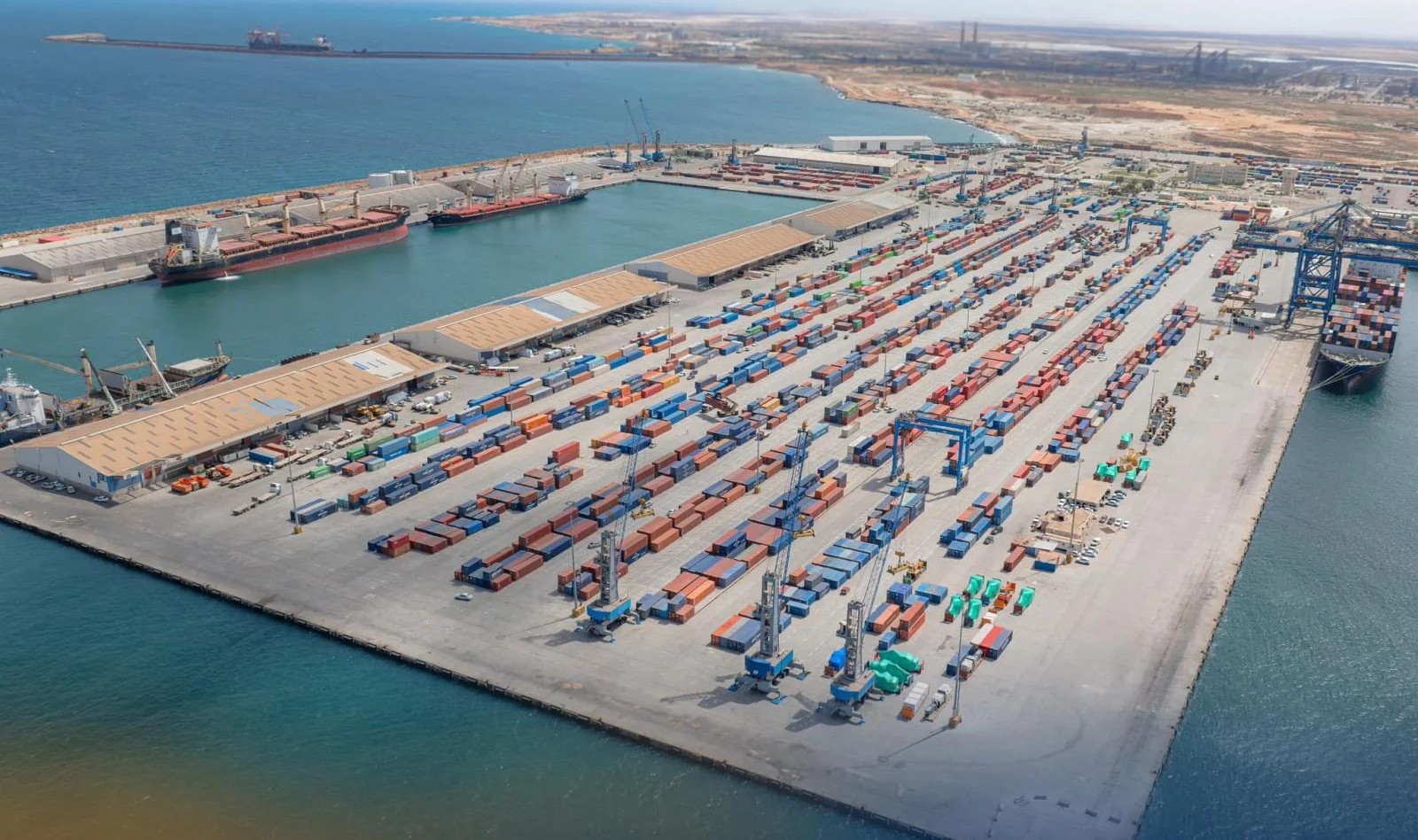
Libya has signed a major international agreement to expand and modernize the Misrata Free Zone, marking one of the country’s largest infrastructure investments outside the oil sector. Prime Minister Abdulhamid Dbeibah announced that the project is expected to attract about $2.7 billion in foreign investment. Annual operating revenues could reach nearly $500 million. The initiative centers on the Misrata Free Zone PPP, which aims to transform the port into a competitive logistics hub serving Africa, Europe, and the Middle East. The project will raise container-handling capacity to four million TEUs per year, a level comparable with leading regional ports. At present, oil contributes more than 95% of Libya’s economic output. Therefore, the government views port and logistics development as a key path toward diversification. By focusing on trade infrastructure, Libya hopes to generate stable revenues while supporting private-sector growth and employment.
International partners play a central role in the project’s structure and delivery. Terminal Investment Limited, a major global port operator, will support operational upgrades and efficiency improvements at the Misrata port. Its involvement brings technical expertise, modern terminal management, and access to global shipping networks. In parallel, Doha-based Maha Capital Partners will provide long-term capital and strategic oversight. This combination reflects a common PPP approach, where private partners handle operations and financing while the state retains strategic control. The signing ceremony took place at the Misrata Free Zone and drew senior officials from Libya, Qatar, and Italy. Their presence highlighted growing international confidence in the project. The port itself covers around 190 hectares, offering space for phased expansion, logistics facilities, and industrial activity. Through this structure, the Misrata Free Zone PPP aims to improve performance without placing heavy pressure on public finances.
Port-led development often produces high multiplier effects, especially in coastal economies. As a result, the government sees the PPP model as a practical way to stimulate growth while sharing risks with private partners. Instead of relying on public borrowing, Libya can mobilize foreign capital and technical know-how. The government has stressed that productive external financing remains essential to modernizing infrastructure and improving state assets. PPP-based free zones also tend to operate with clearer governance and defined revenue streams. These features help improve transparency and investor confidence. In this context, the Misrata Free Zone PPP could serve as a reference for future partnerships in logistics, transport corridors, and industrial zones.
Misrata lies about 200 kilometres east of Tripoli and already ranks among Libya’s most active ports. Its strategic location allows it to serve key shipping routes across the Mediterranean and North Africa. With higher capacity and better efficiency, the port could attract additional transshipment traffic. This would reduce Libya’s dependence on foreign ports and improve trade resilience. Across the region, several countries now rely on PPPs to upgrade ports and logistics assets amid tight budgets. Libya’s move follows this broader trend. However, long-term success will depend on regulatory stability, contract enforcement, and security conditions. Despite these challenges, the agreement signals a clear intention to reconnect Libya with global supply chains. By combining geography with private-sector expertise, the country aims to turn Misrata into a growth engine for the wider economy.