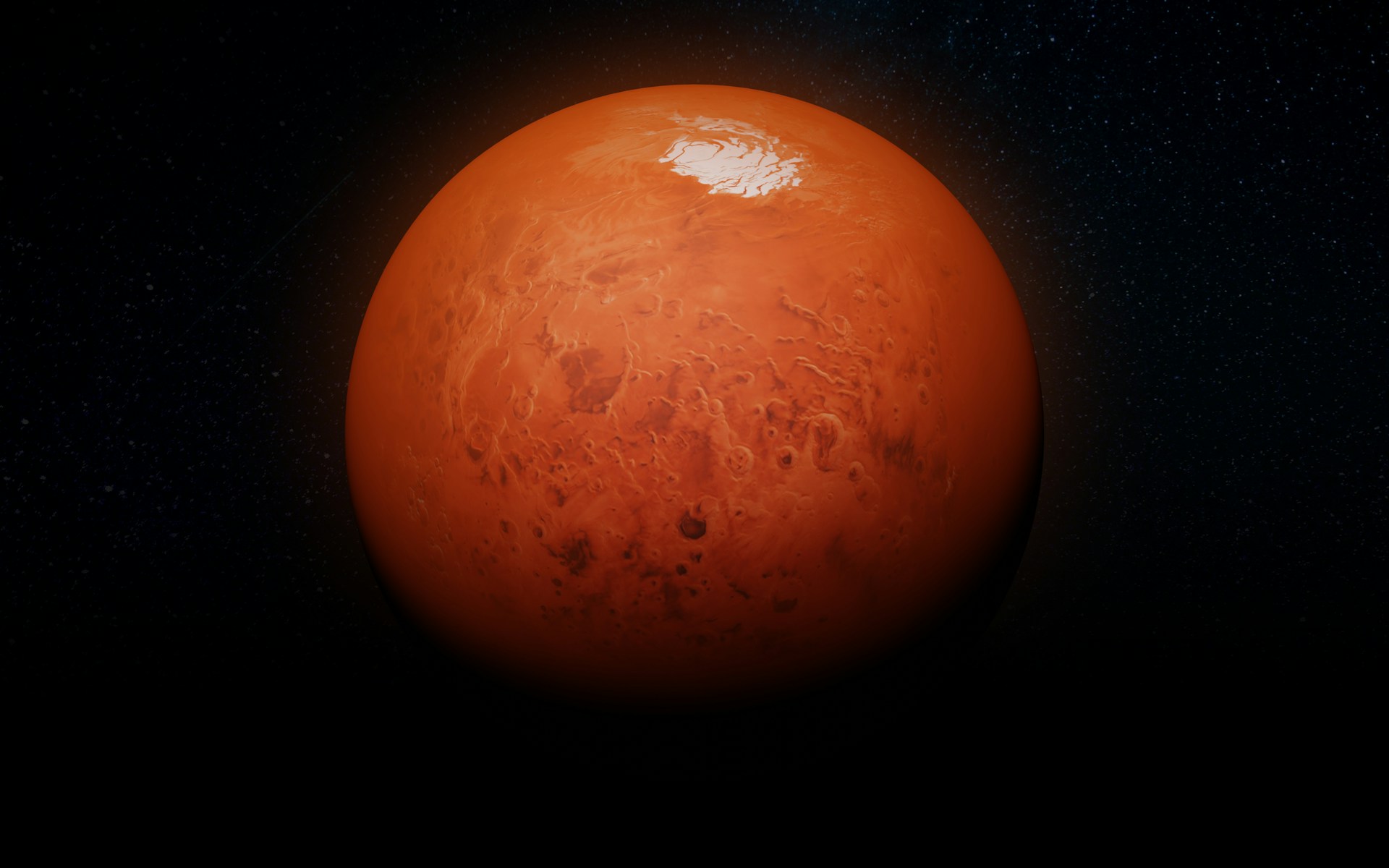
NASA has announced a new public-private partnership with Relativity Space to advance Mars science and support future human exploration. The NASA Mars Science Partnership will combine NASA’s scientific expertise with commercial delivery capacity, marking another step in the growing role of private companies in deep-space missions. Under the arrangement, NASA will provide the Aeolus atmospheric-science payload suite, while Relativity Space will supply the spacecraft, rocket and cruise operations needed to deliver the instruments to Mars. The mission is planned for launch in 2028. Aeolus is designed to study Martian winds, temperatures, dust and clouds, all of which are critical for safe landing and mission planning. Mars has a thin but highly active atmosphere, and sudden dust activity can affect spacecraft operations. Therefore, better atmospheric data will help scientists and engineers prepare for both robotic missions and future astronaut landings on the Martian surface.
The Aeolus Mars mission will carry four NASA-built instruments that together aim to provide the first integrated, daily global view of the Martian atmosphere. The Doppler Wind and Temperature Sounder will measure wind and temperature profiles from the surface up to around 60 kilometers. The Thermal Limb Sounder will observe temperature layers, dust and water-ice clouds. In addition, the Surface Radiometric Sensor Package will measure surface energy balance and atmospheric properties, while the Wide-Field Context Camera will capture daily global images of weather activity. NASA plans to support science operations for at least one Martian year, which is about 687 Earth days. This longer observation period matters because Mars changes strongly with seasons. As a result, the data can improve weather models and help mission teams understand where, when and how spacecraft should enter, descend and land.
The NASA Mars Science Partnership also shows how the space PPP model is moving beyond transport services and low-Earth orbit activity. In this project, NASA keeps responsibility for high-value scientific instruments and data processing, while Relativity Space brings private-sector investment, mission hardware and operational support. This is important because deep-space missions are costly, technically difficult and exposed to long development timelines. A partnership structure can help distribute responsibilities more clearly and create faster mission opportunities. Moreover, NASA’s use of a six-year reimbursable Space Act Agreement gives the project a more stable framework for cooperation. For governments and PPP professionals, the mission offers a useful example of how public agencies can define scientific goals while private partners support delivery. However, such projects also require strong legal treatment of risk, liability, data rights, intellectual property, insurance and mission continuity.
The NASA Mars Science Partnership is not only about collecting weather information from another planet. It is also about building the knowledge needed to reduce risk before humans travel to Mars. Entry, descent and landing systems depend heavily on atmospheric conditions, including wind speed, dust density, temperature and seasonal behavior. Better Mars atmospheric data can support safer landing windows, stronger vehicle design and more predictable mission planning. The project also builds on more than two decades of NASA Mars missions, including MAVEN, Mars Reconnaissance Orbiter and Mars Odyssey. Yet Aeolus adds a more focused daily view of the atmosphere, which can fill important gaps in current models. From a public-private partnership perspective, the mission may become a reference point for future space cooperation. It shows that commercial innovation can support public science, while governments continue to guide long-term exploration goals.
Source: