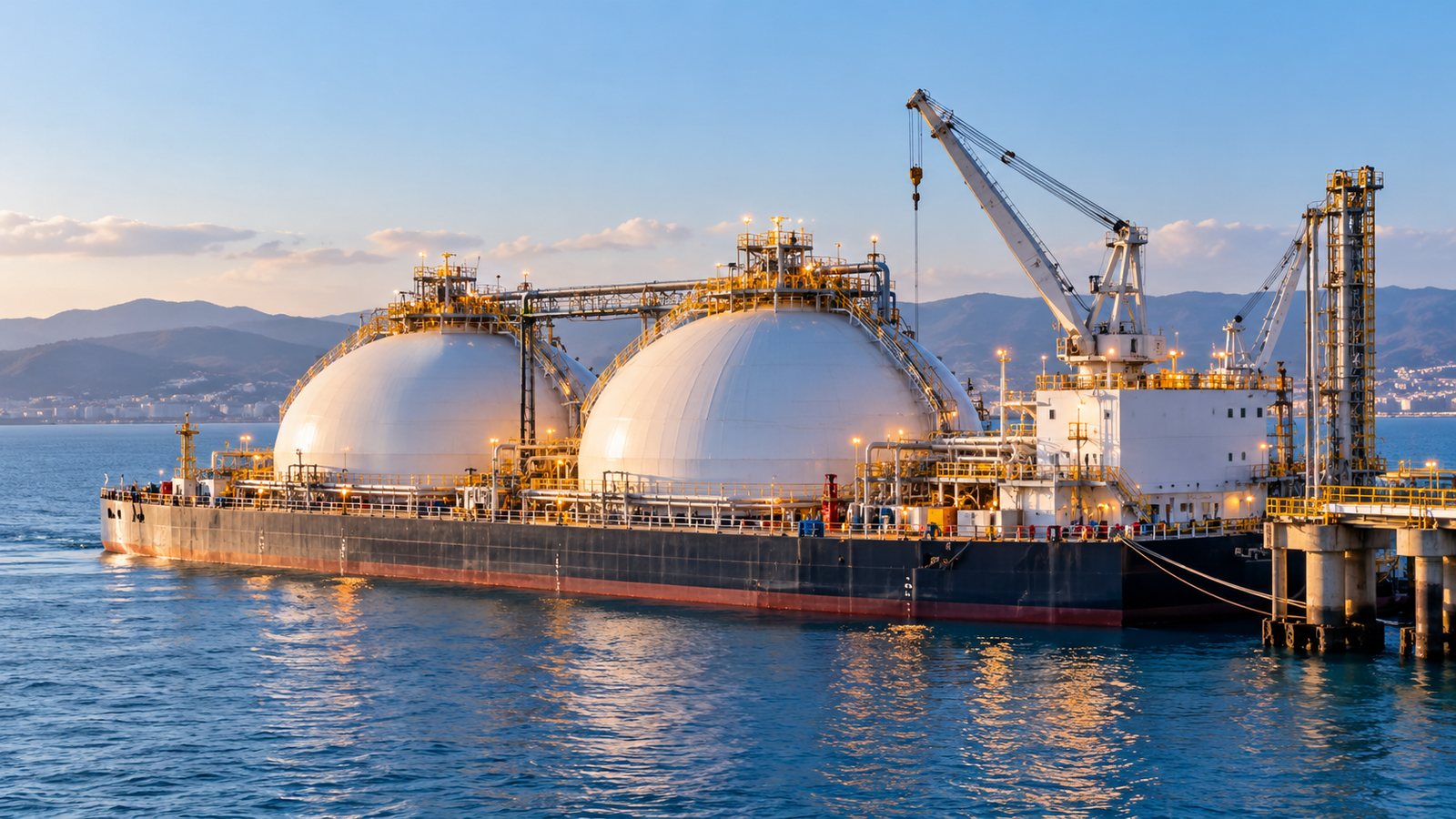
The Lebanon Floating Storage and Regasification Unit (FSRU) project has moved forward after the Cabinet approved plans for a floating storage and regasification unit at Deir Ammar. The project forms part of a wider gas-to-power programme aimed at reducing Lebanon’s reliance on expensive liquid fuels.
The Council of Ministers reportedly approved the plan during its meeting on 1 October 2026. The decision gives the proposed FSRU project a stronger government mandate and allows transaction preparation to move toward procurement.
The proposed FSRU would receive liquefied natural gas, store it offshore and convert it back into natural gas. Power plants in northern Lebanon would then use the gas for electricity generation.
Cabinet approval does not mean the government has awarded a concession or reached financial close. The project still requires detailed structuring, procurement documents and an agreed risk-allocation framework.
The government must also complete the tender process before selecting a private partner. Even so, the approval moves the project beyond the policy and advisory stage.
IFC structures the Lebanon FSRU PPP project
The International Finance Corporation is acting as lead transaction adviser to Lebanon’s Higher Council for Privatization and PPP. IFC’s project disclosure describes a broader transaction involving the FSRU and the Deir Ammar power plants.
The proposed transaction covers the design, financing, rehabilitation, operation and maintenance of the infrastructure. It includes Deir Ammar I and Deir Ammar II combined-cycle gas turbine plants.
Deir Ammar I is an existing power facility. The programme would rehabilitate the plant and improve its ability to operate efficiently using natural gas. The wider programme also considers additional generation capacity.
IFC lists the advisory engagement as active and expects it to continue until 31 August 2027.
The final packaging of the Lebanon FSRU PPP project will be important for investors. The government could combine the FSRU and power assets under one transaction. It could also procure them through separate but linked PPP contracts.
Both approaches would require strong coordination. LNG supply, regasification services, pipeline connections, electricity offtake and plant dispatch must operate together.
Bankability of the Lebanon FSRU PPP project
Lebanon’s electricity sector makes the commercial structure particularly important.
An FSRU usually requires long-term commitments for vessel availability and terminal services. Private investors in power generation also need predictable revenue and reliable payment arrangements.
The government will therefore need to define how the parties will allocate LNG price and volume risk. It must also address minimum throughput obligations, foreign-exchange exposure, payment security and termination compensation.
Electricité du Liban’s financial position and Lebanon’s wider fiscal constraints could influence lender appetite. Investors and banks will closely examine the strength of any government payment support.
IFC’s involvement can help the government apply international procurement and bankability standards. However, IFC’s advisory role does not mean that IFC will finance the project.
Environmental and social requirements will also form an important part of the transaction. The project combines offshore LNG handling, gas infrastructure and electricity generation.
Future tender documents should clearly define safety standards, marine responsibilities and emissions requirements. They should also allocate responsibility for connecting the FSRU with the power plants.
Procurement is the next test for the Lebanon FSRU PPP project
Lebanon has considered gas imports for electricity generation for many years. Meanwhile, fuel shortages and high generation costs have continued to constrain public electricity supply.
Developing the FSRU through a PPP could bring private capital and specialist LNG expertise into the sector. That approach may prove particularly valuable where the government has limited financing capacity.
The next major test for the Lebanon FSRU PPP project will come when Lebanon converts Cabinet approval into a bankable tender.
Investors will want clarity on the concession period, payment mechanism and government support. They will also examine fuel procurement arrangements, guarantees and the relationship between the FSRU and the Deir Ammar power plants.
Until Lebanon completes the competitive procurement process and selects a private partner, the project should be described as a PPP under preparation rather than an awarded concession.
Nevertheless, the Cabinet decision strengthens the policy mandate for the IFC-led transaction. It also creates a clearer route toward market engagement for one of Lebanon’s most significant proposed energy PPPs.