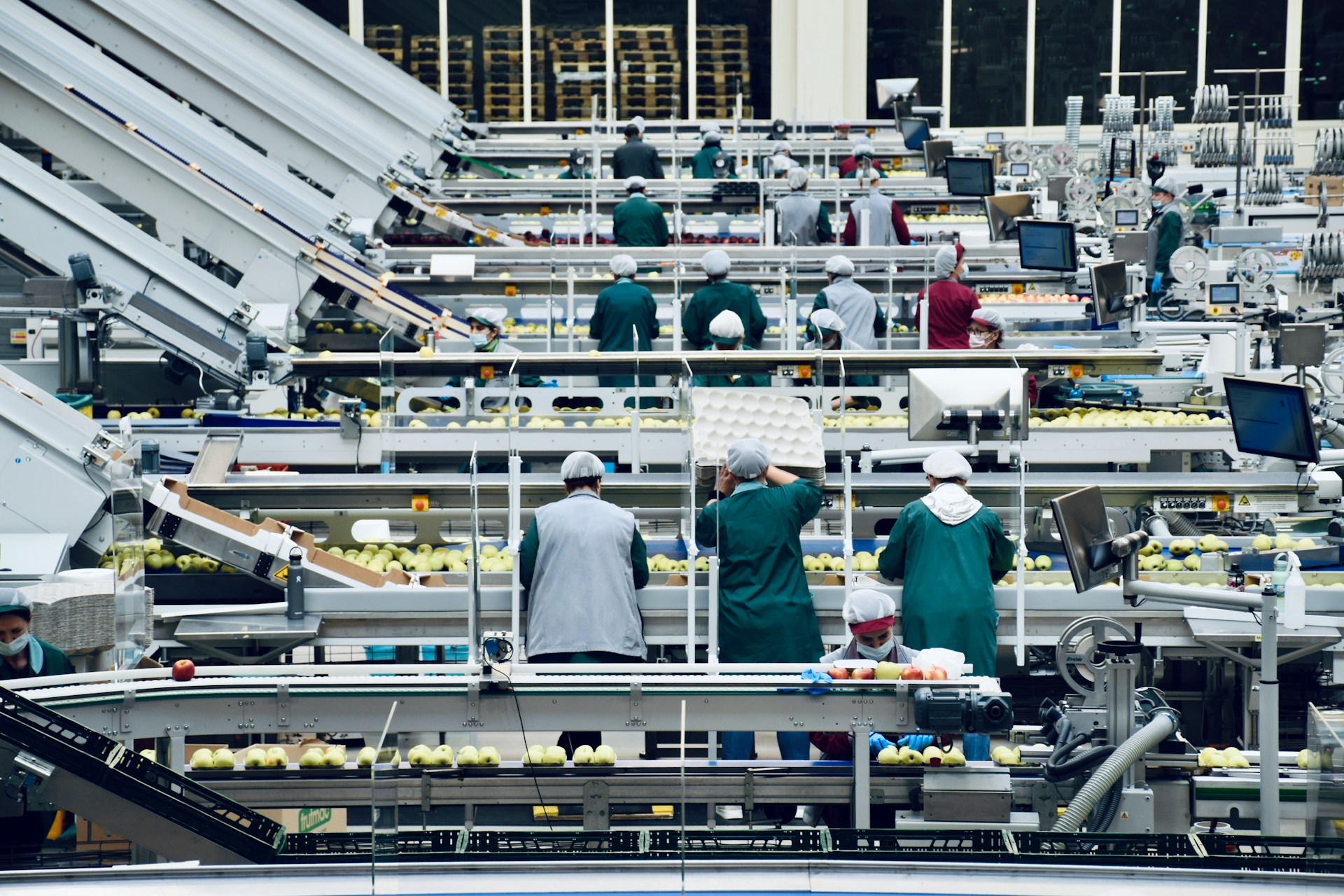
South Korea has launched the Korean Food (KFood) Smart Manufacturing Alliance, a new public-private platform designed to modernize Korean food production through AI, smart factories and digital food safety systems. The launch took place at COEX D Hall in Seoul during the AI+ Smart Factory Show 2026, held from June 10 to June 12.
The new platform brings together government ministries, food manufacturers, technology SMEs, industry associations and specialized institutions to improve the global competitiveness of Korean food products. The Ministry of Agriculture, Food and Rural Affairs, the Ministry of SMEs and Startups, and the Ministry of Food and Drug Safety jointly supported the initiative. At the launch ceremony, companies including CJ OliveNetworks and Hakhwa1934 shared practical examples of digital transformation and smart manufacturing. Their presentations showed how AI, data and automation can improve production efficiency, product quality and hygiene management. The event also highlighted South Korea’s wider ambition to move beyond individual factory support and create a common AI-based model for food manufacturing that can be used across the industry.
The alliance’s vision declaration focused on manufacturing AX, which refers to AI-led transformation across production, quality, safety and business operations. Government officials and private-sector leaders pledged to strengthen global competitiveness, promote data-based manufacturing innovation, expand cooperation among food companies and technology providers, and demonstrate solutions that can be scaled across the sector. The KFood Smart Manufacturing Alliance is important because it creates a structured cooperation platform rather than a one-time support program. It connects demand, production, hygiene management and quality control through data standards and AI tools. This approach can help small and medium-sized food manufacturers adopt smart factory solutions without facing the full burden alone. It may also support export-oriented production by helping firms meet international requirements for safety, traceability and consistent quality. With K-Food already gaining global attention, smarter factories can help Korean brands compete in fast-moving food markets.
Food safety is a central part of the new initiative. The Ministry of Food and Drug Safety plans to connect Smart HACCP, Smart GMP and Food QR systems with the wider manufacturing AX project. Smart HACCP allows companies to automatically record and manage key process-monitoring data through IoT systems, while Smart GMP supports digital management of information such as weight, temperature and time in health functional food production. Food QR can provide real-time access to labeling, safety and recall information through international-standard barcodes. The KFood Smart Manufacturing Alliance may therefore help companies turn food safety data into a business asset. For exporters, this matters because overseas buyers increasingly expect reliable traceability, stronger compliance systems and transparent production records. The AI+ Smart Factory Show also adds momentum, with 300 booths, conferences, business matching sessions, investor relations programs and an AX Business Connect Lounge involving 62 suppliers.
The initiative also reflects a PPP-style approach to industrial development, where government institutions and private companies work together to modernize the food manufacturing sector. South Korea’s approach shows how smart manufacturing can become part of a national competitiveness strategy. It also demonstrates that PPP principles can support innovation in sectors beyond traditional infrastructure such as roads, energy and water.
Source: